top of page
ABOUT LOST CONFESSIONS
Where the unspoken finds a home.
Lost Confessions began with a simple belief:
some of the most meaningful parts of being human are the ones we struggle to put into words.
The thoughts we keep buried.
The questions that follow us into the night.
The wounds that quietly shape us.
The beliefs we question.
The art we create from what we cannot explain.
The stories we carry but never quite know where to place.
These are our Lost Confessions.
The Lost Confessions Vault was created as a home for them—a dark, creative archive dedicated to exploring the hidden, complicated, beautiful, and sometimes uncomfortable parts of the human experience.
Here, psychology, philosophy, spirituality, literature, art, and advocacy exist in conversation with one another.
We explore the mind and why we become who we are. We question reality, identity, morality, consciousness, and what it means to live a meaningful life. We wander through spirituality, symbolism, mysticism, and the things that cannot always be neatly explained. We use poetry, writing, music, and art to give form to emotions that language alone sometimes cannot hold.
And we make room for conversations that are too often silenced or stigmatized.
Lost Confessions is not here to provide one answer, one belief system, or one definition of what it means to heal, grow, or understand yourself.
It exists to encourage the search.
THE VAULT
A vault is usually imagined as a place where things are hidden.
We see it differently.
A vault is where something too valuable to lose is protected.
The Lost Confessions Vault is a living archive of thoughts, stories, questions, knowledge, creativity, and human experience.
Through essays, psychological and philosophical explorations, spiritual discussions, poetry, literature, educational resources, advocacy, interviews, books, and creative projects, The Vault preserves the things worth questioning and the conversations worth continuing.
But Lost Confessions was never meant to contain only one voice.
It belongs to the Wanderers too.
As The Vault grows, Wanderers will be invited to submit their own confessions, stories, poetry, artwork, photography, music, reflections, and creations inspired by Lost Confessions. Selected work will become part of a curated community archive—a place where one person's expression can inspire another person's creation.
Because sometimes the thing you were afraid to say is exactly what someone else needed to know existed.
OUR PURPOSE
Lost Confessions exists for curiosity without judgment.
For psychology without forgetting the person behind the theory.
For spirituality without demanding belief.
For philosophy without pretending every question has an answer.
For advocacy that gives difficult conversations somewhere to exist.
For art created from the things words could not contain.
And for the Wanderers who have never been satisfied with simply accepting the surface of things.
This is a space to question, learn, create, reflect, challenge, connect, and wander deeper.
Not everything hidden is meant to remain forgotten.
Some things are simply waiting for somewhere safe enough to be found.
Welcome to The Vault.
Not all who wander are lost… some are searching for meaning in the dark.
Behind The Vault......
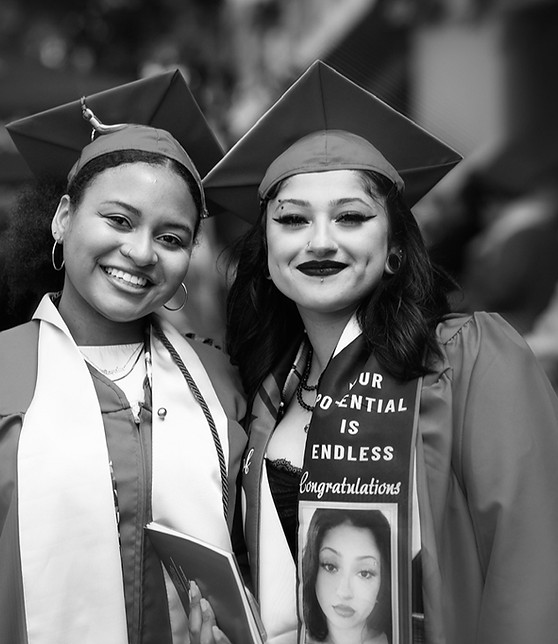
A.V. CERNA
AUTHOR • FOUNDER • ADVOCATE • EDITOR •ArTist• INDEPENDENT PUBLISHER
Some people spend their lives searching for answers. Others learn to make a home within the questions.
A. V. Cerna is the author behind INCISION, creator and founder of Lost Confessions, editor of The Lost Confessions Vault, an independent publisher, psychology student, and advocate whose work exists at the intersection of the human mind, creativity, adversity, and the search for meaning.
But titles have never been enough to explain the person behind The Vault.
At the center of A. V. Cerna's work is an enduring fascination with one question:
What makes us become who we are?
That question has followed her through nearly every part of her life.
It led her toward psychology and the study of human behavior. It found its way into poetry when academic language could not adequately describe emotion. It became philosophy when questions produced more questions. It reached toward spirituality when certain experiences seemed to exist beyond what could easily be explained. And eventually, all of those paths converged into one place.
Lost Confessions.
THE WANDERER BEHIND THE VAULT
A. V. Cerna did not create Lost Confessions from the perspective of someone who believes she has figured life out.
Quite the opposite.
Her perspective has been shaped by experiencing both the darker and more hopeful sides of the human condition. She knows what it means for life to change unexpectedly, for identity to be challenged, for circumstances to alter the way a person sees themselves, and for the future to look completely different from the past.
Those experiences created questions rather than conclusions.
Why do wounds continue affecting us after the moment that created them is gone?
Why do people repeat patterns they consciously want to escape?
How much of who we become is shaped by experience, environment, memory, perception, and survival?
What parts of ourselves are authentic, and what parts were created because we needed them?
Can something painful become meaningful without pretending the pain was necessary?
And perhaps most importantly:
How much can a human being change?
Rather than searching for those answers in one place, she began wandering between disciplines.
Psychology offered theories about the mind and behavior.
Philosophy offered questions about existence, perception, morality, identity, and meaning.
Spirituality offered another language through which to explore the unknown, symbolism, intuition, and the mysteries that exist beyond certainty.
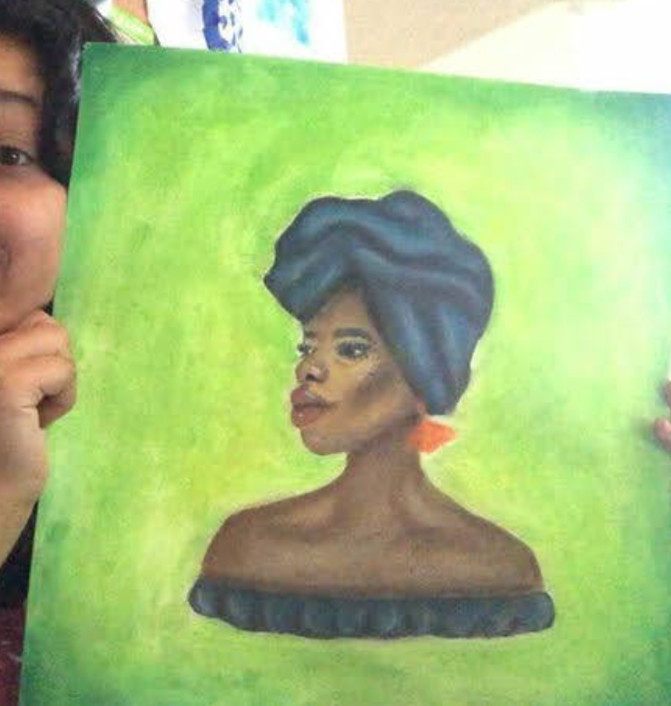
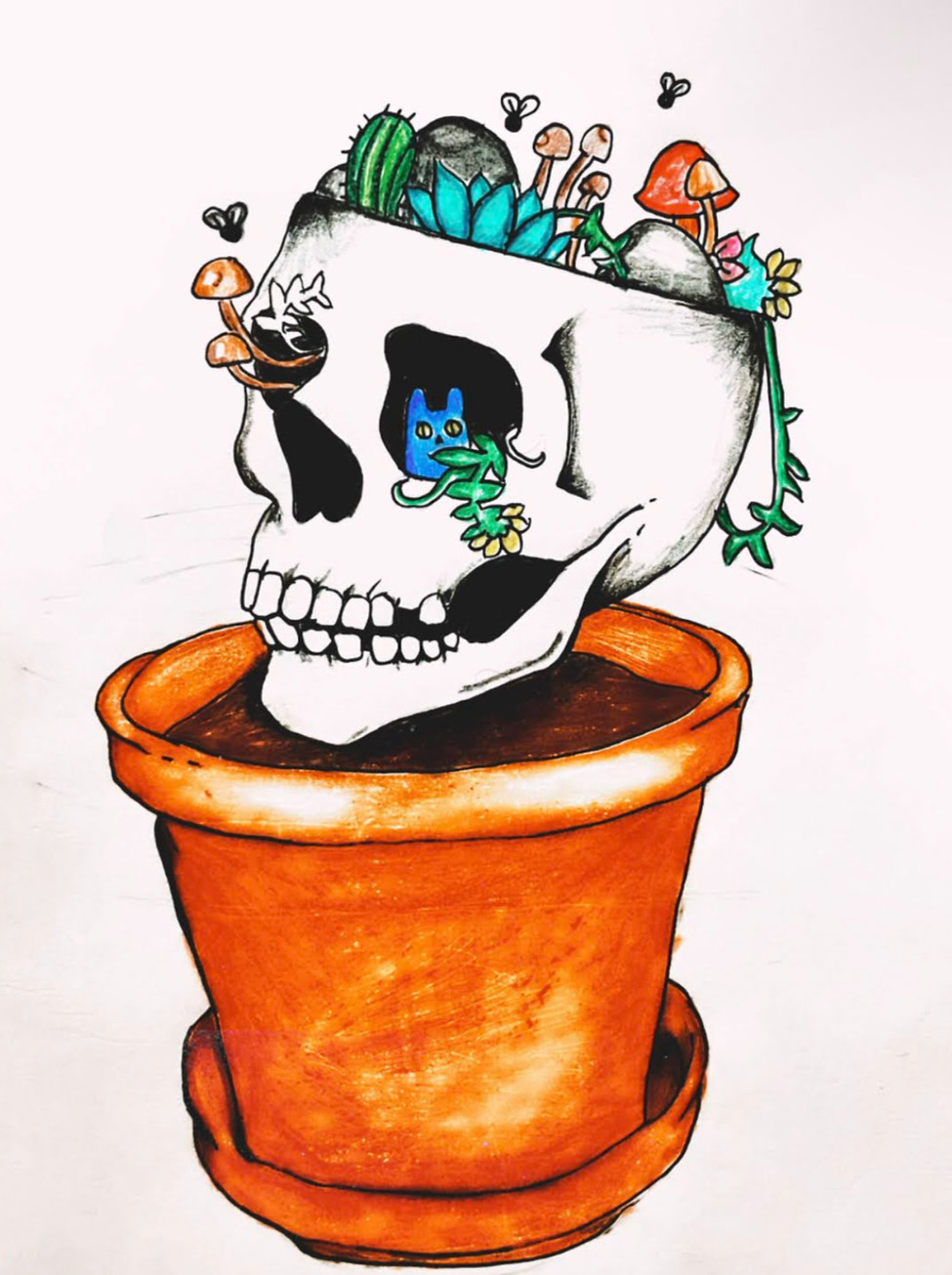
Art offered expression.
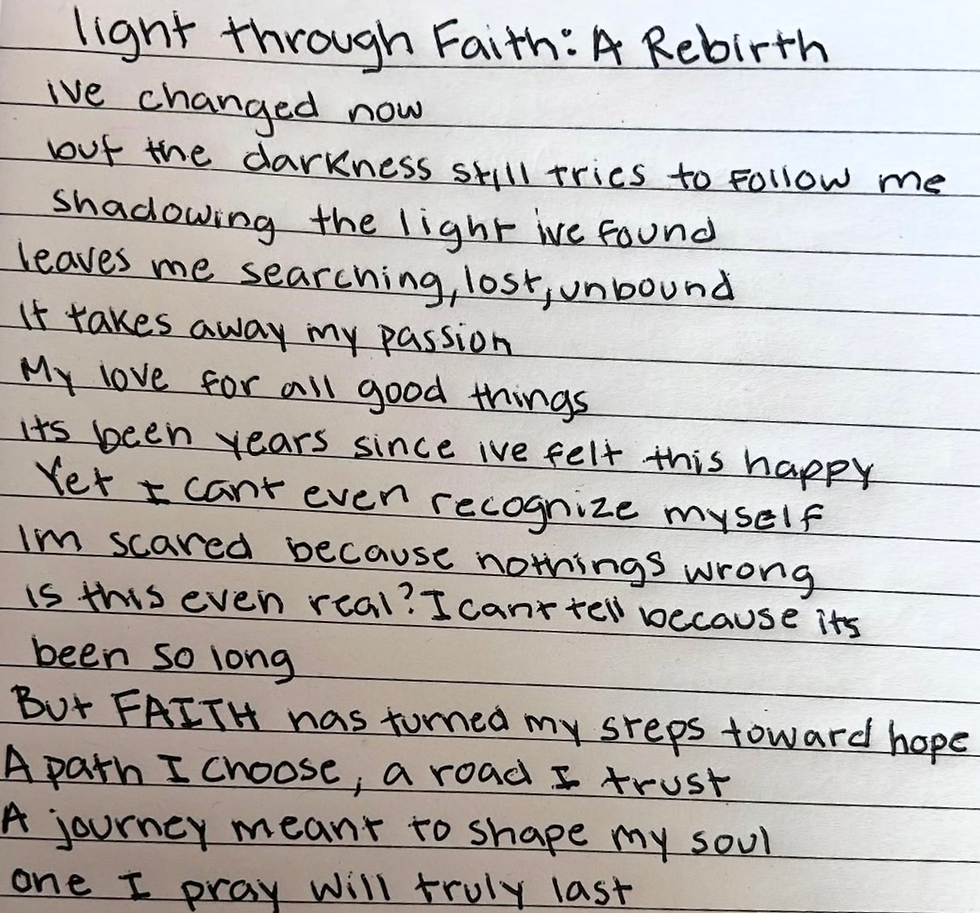
Poetry offered somewhere for everything else to bleed.
That wandering became part of her identity—and eventually, the philosophy behind Lost Confessions itself.
FROM EXPERIENCE TO PURPOSE
A. V. Cerna's connection to advocacy is deeply personal.
Her life has included experiences with adversity, instability, trauma, mental-health struggles, addiction and recovery, violence, and circumstances that exposed her to parts of society many people encounter only from a distance.
But she does not believe a person should be reduced to the worst chapter they have lived through.
Her work is therefore not centered on recounting every detail of what happened.
It is centered on what those experiences made her question, study, advocate for, and create.
Today, she continues her education in psychology with ambitions of pursuing advanced graduate study and eventually earning a doctorate. Her professional work with individuals in special education and behavioral settings has further strengthened her interest in understanding people as individuals rather than reducing them to diagnoses, behaviors, circumstances, or assumptions.
Her past and present may look radically different from one another.
That contrast has become one of the beliefs beneath much of her work:
Human beings are not finished products.
We change.
We contradict ourselves.
We survive things we once believed would consume us.
We outgrow identities that once kept us alive.
We learn.
We relapse into old ways of thinking.
We begin again.
We become.
And sometimes the person standing at the end of one chapter would be almost unrecognizable to the person who began it.
THE ADVOCATE
Advocacy is woven throughout A. V. Cerna's work, particularly conversations surrounding mental health, sexual-assault awareness, trauma, domestic violence, substance-use recovery, disability, poverty, and experiences society often stigmatizes or misunderstands.
Her approach to advocacy is rooted in both lived understanding and an evolving education in psychology.
She does not want Lost Confessions to speak for everyone who has experienced these things. No two people carry the same wound in exactly the same way.
Instead, she wants to help create room for people to speak for themselves.
To question without being shamed.
To tell their stories without being reduced to them.
To create from experiences they once struggled to name.
And, when they choose, to leave their own confession inside The Vault.
THE AUTHOR
Writing became another way of dissecting questions that psychology alone could not answer.
Under the name A. V. Cerna, she is the author of INCISION, Book I of The Anatomy of a Wound series.
The series combines gothic poetry, psychological introspection, philosophical questioning, memory, symbolism, and the anatomy of emotional wounds.
Rather than simply asking what hurts?, her writing asks:
Where did the wound begin?
What entered through it?
What remained beneath the surface?
And who did we become afterward?
INCISION marks the first cut.
It is the beginning of a larger literary exploration of wounds that cannot be photographed, stitched, or easily located—the ones that exist within memory, identity, relationships, behavior, and the stories we tell ourselves.
THE FOUNDER
Lost Confessions began because A. V. Cerna never felt that psychology, spirituality, philosophy, advocacy, literature, art, and lived experience needed to exist in separate rooms.
So she built somewhere they could meet.
The Vault.
Lost Confessions is her independent creative and publishing platform, while The Lost Confessions Vault serves as its living archive and community.
It is a place for essays, poetry, psychological exploration, philosophy, spirituality, advocacy, books, art, interviews, conversations, resources, and eventually the confessions and creations of other Wanderers.
A. V. Cerna serves as its founder, editor, curator, and independent publisher—protecting the identity of Lost Confessions while allowing it to become something larger than the person who created it.
Because The Vault was never meant to contain only her story.
It was built to eventually hold many.
THE PURPOSE
A. V. Cerna does not want to build a platform around having all the answers.
She wants to build one around having the courage to ask better questions.
Lost Confessions exists for people willing to look beneath the surface of themselves and the world around them.
For those fascinated by the mind.
For those searching for meaning.
For those drawn toward philosophy, spirituality, literature, darkness, beauty, psychology, and the strange contradictions of being human.
For those who have survived chapters they rarely speak about.
For those who simply feel different.
For the artists who turn emotion into something another person can finally see.
For the thinkers kept awake by questions without simple answers.
For anyone who has ever carried something inside themselves and wondered:
Does anyone else feel this too?
Those are the Wanderers.
And A. V. Cerna is one of them.
She is still studying. Still questioning. Still writing. Still creating. Still changing.
The difference is that now there is somewhere to leave what she finds along the way.
The Vault.
Not all who wander are lost… some are searching for meaning in the dark.





bottom of page