Exploring Mental Health Through Gothic Art and Literature

Updated: 20 hours ago
The Gothic has always been drawn to what hides beneath the surface—the haunted, the misunderstood, the repressed, and the parts of the human mind we would sometimes rather leave unexplored. Through unsettling landscapes, complicated characters, symbolism, and dark beauty, Gothic art and literature give form to emotions and experiences that can be difficult to put into words. In this exploration, we’ll look at how the Gothic can become a lens for understanding mental health, fear, isolation, identity, and the complexities of the human psyche—and why darkness can sometimes help us understand what the light overlooks.

Why Lost Confessions Finds Meaning in the Dark
There are parts of the human experience that rarely arrive dressed in beautiful language.
Grief is messy. Fear is uncomfortable. Identity can be confusing. The mind contradicts itself. Memories linger. People carry questions they cannot answer and emotions they cannot always explain. Sometimes the most important parts of us are also the parts we have been taught to hide.
Lost Confessions was created for those parts.
It began with a simple belief: some of the most meaningful things we carry are the things we struggle to put into words.
The thoughts we bury. The questions that follow us into the night. The experiences that quietly shape who we become. The beliefs we question. The art we create when ordinary language is no longer enough.
These are our Lost Confessions.
Why a Vault?
When people imagine a vault, they usually imagine something locked away.
Something hidden.
But I began thinking about a vault differently.
A vault is also where we place something too valuable to lose.
That idea became the foundation of The Lost Confessions Vault—a growing archive of psychology, philosophy, spirituality, literature, poetry, art, advocacy, personal reflection, and eventually, the voices and creations of other Wanderers.
The purpose isn't to tell people what to believe or how they are supposed to understand themselves.
It is to create somewhere we can question.
Why do we become who we are? Why do certain experiences stay with us? Why are humans drawn to beauty, fear, symbolism, spirituality, darkness, love, destruction, and creation? How much of ourselves is shaped by our environment, and how much can we consciously change? What happens when psychology explains part of an experience, but philosophy, spirituality, or art gives us another language for understanding it?
I don't believe every human question fits neatly into one category.
Neither does Lost Confessions.
Why Psychology Lives Here
Psychology has always fascinated me because human beings are complicated.
We are shaped by biology, environment, relationships, culture, learning, memory, development, perception, and countless experiences that interact with one another.
Yet behind every theory, diagnosis, statistic, or psychological concept is still a person.
That matters to me.
Lost Confessions explores psychology not simply as something studied in textbooks, but as something happening around us constantly—in relationships, identity, behavior, trauma, coping, perception, creativity, attachment, social expectations, and the stories we tell ourselves about who we are.
Mental health is therefore an important part of The Vault, but Lost Confessions isn't meant to reduce people to disorders or symptoms.
I want to explore the person behind the psychology.
So Why Make It Gothic?
Because I have never believed darkness automatically means hopelessness.
Gothic art and literature have spent centuries wandering directly into subjects people often avoid: mortality, isolation, fear, obsession, grief, madness, identity, the supernatural, social repression, forbidden questions, and the hidden sides of human nature.
The gothic does something fascinating.
It makes the uncomfortable visible.
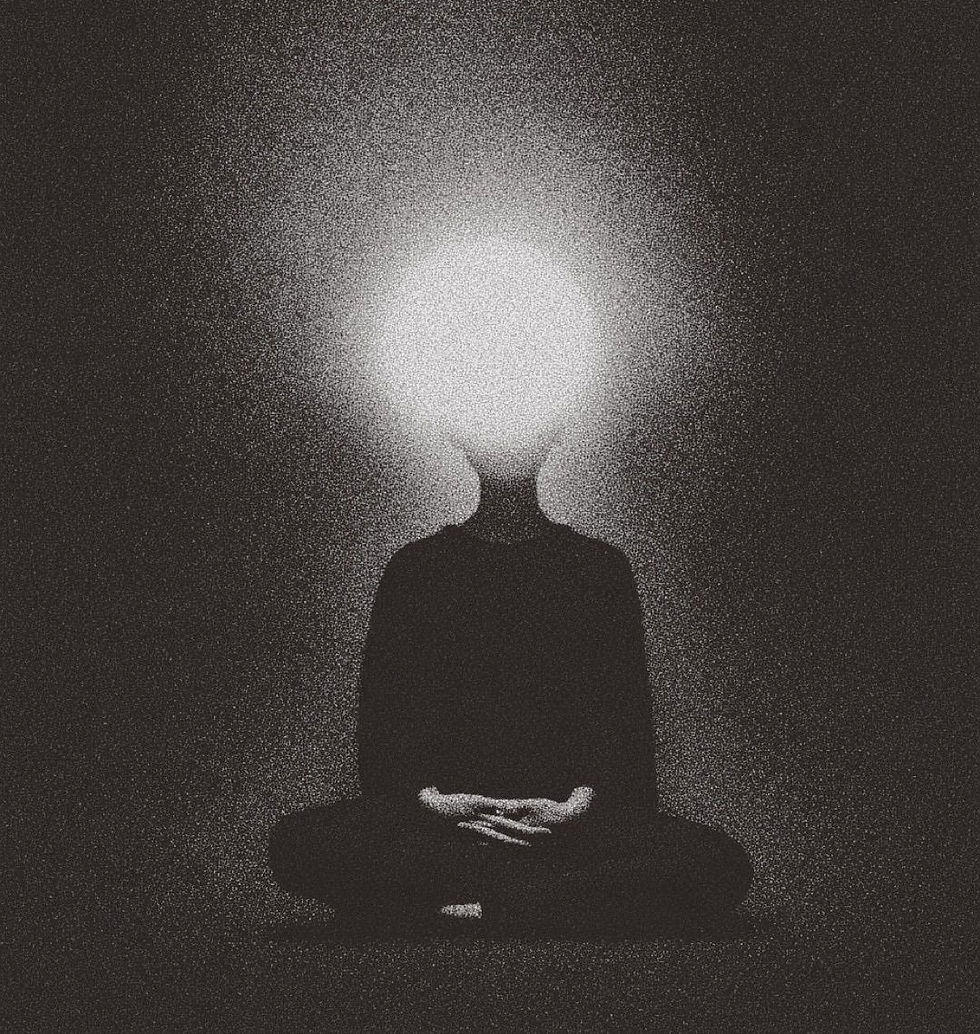
A decaying mansion can become a metaphor for memory. A ghost can represent something from the past that refuses to disappear. A monster can force us to question who society considers monstrous. Darkness can symbolize uncertainty. Ruins can remind us that destruction and beauty are capable of existing in the same place.
These images give physical form to experiences that can otherwise be difficult to explain.
And that is exactly where gothic art and psychology begin speaking to one another.
Darkness Is a Language
The dark aesthetic of Lost Confessions isn't there because I believe suffering is beautiful or because pain should be romanticized.
It is there because darkness is part of the human experience.
Pretending otherwise doesn't make it disappear.
Art gives us a way to approach difficult emotions from a distance. Literature allows us to enter another person's mind for a few hundred pages. Poetry can compress an entire emotional experience into several lines. Music can communicate something before we even understand why it affects us.
Sometimes creating something from an emotion is easier than explaining it.
Sometimes reading someone else's words gives a name to something we couldn't name ourselves.
Sometimes looking into darkness doesn't pull us further into it.
Sometimes it helps us understand what was hiding there.
The Beauty of Contrast
Lost Confessions may look dark, but darkness is only half of its visual language.
Look closely and you'll find roses beside blades. Candlelight surrounded by black. Antique paper against deep red. Anatomy beside poetry. Death beside growth. Ruins beside creation.
That contrast is intentional.
Human beings are contradictions too.
We can grieve and laugh in the same week. We can love someone and recognize that they hurt us. We can outgrow versions of ourselves we once desperately needed. We can question our beliefs without abandoning our sense of wonder. We can carry difficult memories while creating entirely new ones.
Darkness and beauty are not always opposites.
Sometimes contrast is what allows us to recognize either one.
Where Literature Enters the Vault
Literature has always given humanity somewhere to preserve its most difficult questions.
Gothic literature in particular often places characters in environments where reality becomes uncertain and the boundaries between internal and external experience begin to blur.
That makes it an incredible space for psychological interpretation.
What is the character afraid of?
What are they repressing?
Can we trust their perception?
Is the monster literal, symbolic, or both?
What does the setting reveal about the character's internal world?
And perhaps most importantly:
Why are we fascinated by it?
Those are the kinds of questions I want The Library within Lost Confessions to explore—not only with gothic literature, but with poetry, philosophy, psychology, mythology, spirituality, art, music, and culture.
I don't want to simply tell you what a book says.
I want us to wonder why it stays with us.
Lost Confessions Is Not About Worshipping the Dark
It is about refusing to pretend it isn't there.
There is an important difference.
Mental-health conversations do not always need to be packaged in perfect pastel colors or motivational language to be meaningful. Some people connect with softness. Others find comfort in strange art, old books, rainy windows, haunting music, gothic architecture, black clothing, poetry, symbolism, or stories that acknowledge that being human can sometimes be incredibly complicated.
Neither approach is inherently more enlightened than the other.
Lost Confessions simply chooses to wander through the darker hallway.
Not because darkness is the destination.
Because there may be something worth understanding inside it.
What Lost Confessions Is Becoming
The Vault is still growing.
Here you will find explorations of psychology and human behavior, philosophy, spirituality and symbolism, mental health, advocacy, gothic literature, poetry, art, music, books, creativity, and the strange questions that exist somewhere between all of them.
You will also find my own work, including INCISION, Book I of The Anatomy of a Wound, a poetry series that uses the anatomy of a wound as a psychological and literary metaphor.
But Lost Confessions was never supposed to contain only my voice.
As The Vault grows, I want Wanderers to become part of the archive too—through confessions, stories, poetry, artwork, photography, music, reflections, interviews, and creations inspired by the ideas explored here.
Because the thought you almost didn't share may become the thought that makes another person realize someone else has wondered the same thing.
Welcome, Wanderer
I don't have every answer.
I don't think anyone does.
That may be the point.
Lost Confessions exists for people who would rather keep asking questions than pretend the mysteries of being human have already been solved.
For those interested in the mind.
For those drawn to philosophy.
For those curious about spirituality.
For those who create.
For those who advocate.
For those who find strange things beautiful.
For those who have looked at the darker parts of human existence and wondered not only how do we escape this?
But also:
What can this teach us about being human?
That is why the darkness belongs here.
That is why the art belongs here.
That is why psychology belongs here.
And that is why I built The Vault.
Not all who wander are lost… some are searching for meaning in the dark.
— A. V. Cerna
Founder of Lost Confessions
Author of INCISION — Book I of The Anatomy of a Wound 🖤
Comments