The Intersection of Philosophy and Personal Transformation

Updated: 20 hours ago
How questioning what we believe can change the way we understand ourselves
Personal transformation often begins with a question:
Who am I—and who am I becoming?
For centuries, philosophy has challenged human beings to examine their beliefs, question what they think they know, and consider how their choices shape the lives they create.
From Socrates and the examined life to Aristotle’s ideas about character, the Stoics’ reflections on control, and existentialist questions about freedom and identity, philosophy offers more than theories about existence.
It gives us different ways of looking at ourselves.
This is one of the reasons philosophy has such an important place within Lost Confessions.
I am fascinated by the questions that exist underneath everyday life: Why do we believe what we believe? How much of our identity did we consciously choose? Can people fundamentally change? What makes a meaningful life? How much control do we actually have over who we become?
I don't think philosophy gives us one universal answer.
I think it teaches us how to question the answers we already have.
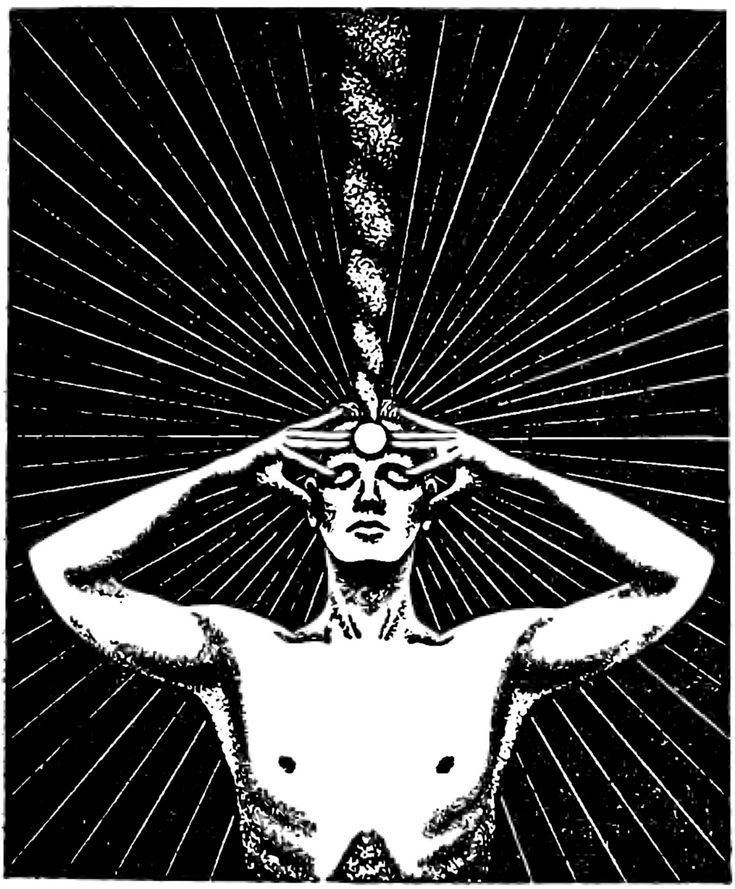
Philosophy Was Never Just About Old Books
When people hear the word philosophy, they may imagine ancient men debating impossible questions or enormous books filled with complicated language.
But philosophy has also been intensely practical.
Some ancient philosophical traditions treated philosophy as something that should affect how a person actually lives, not merely what they can intellectually argue.
Questions about virtue, happiness, judgment, responsibility, knowledge, character, and the good life were questions about human existence itself.
That makes philosophy incredibly relevant to personal transformation.
You can learn thousands of facts without ever examining yourself.
You can understand a psychological theory without applying it to your behavior.
You can claim to value honesty while lying whenever honesty becomes inconvenient.
Knowing and becoming are not the same thing.
Philosophy asks us to examine the space between them.
Socrates: The Courage to Question Yourself
One of the foundations of Western philosophy begins with something deceptively simple:
Ask questions.
Socrates left no writings of his own, so what we know about him comes through other ancient writers, particularly Plato and Xenophon. He became famous for conversations in which he questioned people's confidence that they understood concepts such as courage, justice, knowledge, and virtue.
Instead of simply giving people an answer, Socratic examination could reveal contradictions in what they thought they knew.
That matters far beyond a philosophy classroom.
Think about the beliefs we carry around every day:
This is what success looks like.
This is what makes someone a good person.
I have always been this way.
People like me don't do that.
If I fail, it means I wasn't good enough.
Everyone will judge me.
We can repeat an idea for years without ever asking where it came from.
Socratic thinking interrupts that certainty.
It asks:
Why do I believe this?
How do I know?
Where did this belief come from?
Is there evidence against it?
Would I believe something different if I had grown up somewhere else?
What would make me change my mind?
The Socratic tradition is strongly associated with examining our beliefs and recognizing the limits of what we know. Ancient sources portray Socrates as repeatedly pushing people to account for what they claimed to understand.
That gives personal transformation an important starting point:
You cannot seriously reconsider a belief you refuse to question.
“Know Yourself” Is Harder Than It Sounds
Self-knowledge sounds simple until we actually attempt it.
We know our names.
We know what music we like.
We know our favorite colors, interests, aesthetics, and hobbies.
But those things are only fragments of identity.
Do I know why criticism from one person affects me more than criticism from another?
Do I know which values are genuinely mine and which I adopted because they were expected of me?
Do I know how fear changes my decisions?
Do I recognize when pride is influencing an argument?
Do my actions actually reflect the person I claim to be?
This is where philosophy begins overlapping with another major interest of mine: psychology.
Psychology can help investigate how people think, learn, perceive, develop, behave, and relate.
Philosophy can push us toward another layer of questioning:
What should I do with that knowledge?
Understanding why you behave a certain way and deciding how you want to behave are related questions—but they aren't identical.
Aristotle: Who Are You Practicing Becoming?
Socrates gives us questions.
Aristotle gives us practice.
Aristotle's ethics centers heavily on character, virtue, choice, practical wisdom, and human flourishing.
An important part of Aristotelian ethics is that virtue is expressed through action. His account is more sophisticated than the popular slogan that “you are your habits,” but repeated practice and the development of a stable character matter enormously within his ethics.
This leads to one of my favorite questions for personal transformation:
Who are you practicing becoming?
We often judge ourselves according to intention.
I want to become more patient.
I want to become confident.
I want to become disciplined.
I want to become compassionate.
But wanting something and practicing it are different.
If I say I value compassion, what happens when compassion becomes inconvenient?
If I say I value honesty, am I still honest when telling the truth might cost me something?
If I want courage, what do I repeatedly choose when I am afraid?
Personal transformation usually isn't one cinematic moment where everything suddenly makes sense.
It is often painfully ordinary.
A decision.
Then another.
Then another.
Eventually, those decisions begin forming patterns.
And patterns begin shaping character.
Aristotle's “Golden Mean” Is Often Misunderstood
Another useful Aristotelian concept is the mean.
It is sometimes oversimplified as:
“Everything in moderation.”
That's not quite what Aristotle meant.
Virtue involves responding appropriately to circumstances, and the appropriate response can lie between problematic extremes of excess and deficiency. The “middle” is not necessarily a mathematical halfway point.
Take courage.
Too little willingness to face danger can become cowardice.
But recklessly throwing yourself toward every danger isn't courage either.
Or consider anger.
The lesson isn't necessarily that a good person never becomes angry.
Sometimes anger is understandable.
The more interesting question becomes whether the emotion fits the situation and whether our response is guided by good judgment.
This matters because personal transformation shouldn't require becoming emotionless.
The question isn't:
“How do I stop feeling this?”
Sometimes the better question is:
“What is this emotion telling me, and what am I going to do with it?”
The Stoics: What Actually Belongs to Me?
Now we reach one of the most popular—and frequently oversimplified—philosophical traditions online:
Stoicism.
Stoicism began in the Hellenistic period and later became strongly associated with thinkers including Epictetus, Seneca, and Marcus Aurelius.
One of its most useful ideas for personal transformation comes from Epictetus.
At the beginning of the Enchiridion, Epictetus distinguishes between things that depend upon us and things that do not. His broader philosophy places tremendous importance on our judgments, choices, character, and responses.
In everyday terms:
You cannot completely control another person's opinion of you.
You cannot rewrite yesterday.
You cannot guarantee that every plan succeeds.
You cannot control every circumstance that enters your life.
You cannot make another person become who you want them to be.
But you can work on your judgments.
Your decisions.
Your responses.
Your values.
Your actions.
That distinction can completely change where we place our energy.
Acceptance Is Not the Same as Approval
This is where Stoicism sometimes gets flattened into:
“Just don't care.”
That isn't a very accurate picture.
Stoic ethics was concerned with living virtuously and rationally, including fulfilling social and civic responsibilities. It was not simply a philosophy of becoming emotionally indifferent to everyone and everything around you.
Recognizing that something lies outside your control does not mean you have to approve of it.
It means recognizing reality clearly enough to decide what remains within your responsibility.
There is an important difference between:
“This shouldn't be happening.”
and
“This is happening. What can I do now?”
The first may describe how we feel about reality.
The second gives us somewhere to move.
Marcus Aurelius: Philosophy as a Private Conversation
This is part of what makes Marcus Aurelius so interesting.
His Meditations were essentially personal philosophical reflections rather than a polished self-help book written for modern readers.
He repeatedly returned to questions about judgment, responsibility, mortality, other people, behavior, and how he wanted to conduct himself.
I find something strangely human about that.
Even someone deeply committed to philosophy still had to remind himself of his philosophy.
Again.
And again.
And again.
Understanding something once does not mean we have mastered it.
You can know that another person's opinion does not define you and still feel hurt by criticism.
You can understand that anger can distort judgment and still become angry.
You can understand that life is temporary and still waste a Tuesday worrying about something meaningless.
Philosophy doesn't magically remove human nature.
Sometimes it simply gives us somewhere to return when we lose perspective.
Existentialism: What If You Aren't Finished Yet?
Then philosophy takes us somewhere darker and, to me, incredibly interesting:
Existentialism.
Existentialist philosophers examined freedom, anxiety, responsibility, meaning, authenticity, alienation, and what it means to exist as a human being without assuming that our identities arrive completely predetermined.
Jean-Paul Sartre famously expressed this through the idea that:
existence precedes essence.
In simplified terms, Sartrean existentialism rejects the idea that we arrive with a completely predetermined essence that dictates exactly who we must become. Human existence involves continually defining ourselves through situated choices and actions.
That doesn't mean circumstances don't matter.
They absolutely do.
We are born into situations we did not choose.
We inherit histories.
Bodies.
Cultures.
Families.
Economic circumstances.
Expectations.
Opportunities and limitations.
Existential freedom does not magically erase reality.
But within our circumstances, existentialism asks an unsettling question:
What are you going to do with the life in which you find yourself?
Simone de Beauvoir: Freedom Exists Among Other People
This is where Simone de Beauvoir adds another important dimension.
Personal transformation cannot be understood entirely as an isolated individual inventing themselves without consequences.
We exist among other people.
Our choices affect them.
Social conditions shape possibilities.
Power matters.
Responsibility matters.
Freedom exists in a world shared with other human beings.
That complicates the inspirational version of:
“Just become whoever you want to be.”
Sometimes transformation requires recognizing what can be changed personally.
Sometimes it requires recognizing larger conditions that affect people's choices.
And sometimes wisdom means understanding the difference.
Nietzsche and Self-Overcoming
Friedrich Nietzsche gives us another provocative way to think about transformation.
Nietzsche challenged inherited morality, conformity, traditional assumptions about value, and the temptation to accept beliefs simply because society has handed them to us.
One concept often discussed in relation to Nietzsche is self-overcoming: the idea that development can require confronting and moving beyond previous limitations, inherited values, and previous forms of ourselves.
This idea resonates with me because human identity is not perfectly static.
We change.
We learn things that alter our worldview.
We contradict previous versions of ourselves.
We discover that something we once desperately wanted no longer matters.
We outgrow beliefs that once gave us certainty.
And sometimes becoming requires grieving who we thought we were supposed to be.
Personal transformation isn't always adding something new.
Sometimes it is questioning what no longer belongs.
Philosophy Doesn't Tell You What to Believe
This is perhaps the most important part.
I don't want Lost Confessions to become a place where I tell Wanderers:
Become a Stoic.
Become an existentialist.
Believe Aristotle.
Agree with Nietzsche.
That would defeat the purpose.
Philosophers disagree with each other.
Sometimes dramatically.
For example, Aristotle and the Stoics did not have identical accounts of what human flourishing requires. Aristotle's ethics allows external goods to matter to flourishing, while Stoic ethics makes virtue sufficient for happiness.
That's fascinating.
Because now you have to think.
Which argument is stronger?
Where are its weaknesses?
What assumptions does it make?
Does another philosophical tradition challenge it?
Does your experience support it?
Could your experience also be misleading you?
That is what I want philosophy to do inside The Vault.
Not create followers.
Create questions.
Philosophy and Psychology: Two Different Mirrors
Psychology and philosophy frequently meet inside Lost Confessions because they can approach similar human problems from different directions.
Imagine someone repeatedly making the same destructive decision.
Psychology might investigate learning, cognition, environment, development, emotion, reinforcement, relationships, or other factors influencing the pattern.
Philosophy can introduce different questions.
What does this person believe is valuable?
What responsibility do they have for changing the behavior?
What would a good decision look like?
What makes an action right or wrong?
What kind of person are repeated choices helping them become?
One discipline doesn't make the other unnecessary.
For me, their intersection is where things become particularly interesting.
Psychology can help us understand how humans function.
Philosophy forces us to wrestle with what we should do with being human.
Ethics: When Transformation Goes Beyond the Self
Personal growth can easily become incredibly self-centered.
My happiness.
My peace.
My goals.
My boundaries.
My success.
Philosophy complicates that.
Ethics asks us to consider other people.
Utilitarian traditions ask us to think seriously about consequences and well-being.
Deontological traditions ask whether certain duties or principles should guide actions regardless of whether breaking them would produce a desirable result.
Virtue ethics asks what good character looks like.
These frameworks can disagree about the exact same moral problem.
That disagreement is useful.
It reminds us that:
“This feels right to me” is not always the end of an ethical argument.
Personal transformation should involve not only asking:
Who do I want to become?
but:
What responsibilities do I have toward the people who have to share a world with the person I become?
Philosophy as a Practice
You don't need to sit underneath a marble statue reading ancient Greek to incorporate philosophy into everyday life.
Start with questions.
When something affects you strongly, ask yourself why.
When you're completely certain you're right, try constructing the strongest argument against your own position.
When making an important decision, ask what values are actually guiding it.
When you say something is “good,” “bad,” “fair,” “successful,” “normal,” or “meaningful,” stop and ask:
What do I actually mean by that word?
Keep a philosophical journal.
Read philosophers you agree with.
More importantly, occasionally read philosophers who make you uncomfortable.
Discuss ideas with people capable of disagreeing without turning disagreement into disrespect.
And allow yourself to change your mind.
Changing your mind after encountering better reasoning isn't intellectual weakness.
Sometimes it is evidence that thinking actually occurred.
Five Questions to Take Into The Vault
When I think about philosophy as a tool for transformation, I keep returning to questions like these:
1. What do I believe—and why do I believe it?
Trace the belief backward. Was it examined, inherited, assumed, experienced, or taught?
2. Do my actions reflect the values I claim to have?
Our ideals become much more revealing when compared with our behavior.
3. What is actually within my responsibility?
Separate what you can influence from what you wish you could control.
4. Who am I repeatedly practicing becoming?
Look at patterns rather than promises.
5. What if I'm wrong?
Not because you necessarily are—but because being willing to ask keeps certainty from becoming a prison.
The Person You Were Is Not Necessarily the Person You Must Remain
This is ultimately where philosophy becomes personal for me.
I am fascinated by transformation because I don't believe human beings are finished products.
We learn.
We contradict ourselves.
We make mistakes.
We encounter ideas that rearrange our understanding of the world.
We leave environments.
We enter new ones.
We create.
We question.
We become.
The past matters.
Our choices have consequences.
Accountability matters.
But acknowledging the past is different from believing that the past has already written every remaining chapter.
Existentialism especially challenges the idea of a completely fixed self, emphasizing human existence as an ongoing process of self-making through situated choices.
Maybe the question “Who am I?” is incomplete.
Maybe another question belongs beside it:
“Who am I becoming?”
The Philosophy Behind Lost Confessions
This is why philosophy belongs inside The Lost Confessions Vault.
Lost Confessions isn't built around the idea that I possess some secret answer to existence.
Quite the opposite.
The Vault exists because I think the questions are worth preserving.
Psychology helps us investigate the mind.
Philosophy challenges what we believe.
Spirituality allows us to explore questions that people have asked across cultures and generations.
Literature lets us inhabit perspectives other than our own.
Art gives form to experiences that ordinary language sometimes struggles to contain.
And personal reflection turns the question back toward us.
I want Wanderers to encounter ideas here and ask:
Do I believe this?
Why?
What would someone who disagrees with me say?
What assumptions am I carrying into this conversation?
What evidence could change my mind?
What does this reveal about me?
That is the kind of transformation philosophy offers me.
Not a perfect answer.
A better question.
The Art of Not Knowing
Perhaps one of the most valuable things philosophy can teach us is how to say:
I don't know.
Human beings have spent thousands of years debating consciousness, morality, reality, identity, freedom, death, knowledge, happiness, meaning, and existence.
We still disagree.
That doesn't make philosophy a failure.
It makes the conversation human.
Socrates gives us the courage to question what we think we know.
Aristotle reminds us that character must eventually appear in how we act.
The Stoics challenge us to examine where our responsibility actually lies.
Existentialism confronts us with freedom, responsibility, and the unsettling possibility that we are still participating in who we become.
And philosophy as a whole leaves us with something I find strangely comforting:
You don't have to possess every answer in order to live seriously with the questions.
Maybe transformation isn't about discovering one final, permanent version of yourself.
Maybe there isn't one.
Maybe we are continually examining, learning, choosing, failing, reconsidering, creating, and becoming.
And perhaps that is why some of us keep wandering.
Not because we are lost.
Because there is still more to understand.
Not all who wander are lost… some are searching for meaning in the dark.
— A. V. Cerna
Founder of Lost Confessions

Comments