Shadow Work: Embracing Your Dark Side for Growth

Updated: 20 hours ago
Shadow work begins with an uncomfortable question: How well do you actually know yourself?
Not the version of yourself you present to other people. Not your accomplishments, aesthetic, personality type, or the story you have learned to tell about who you are—but the emotions you avoid, the qualities you reject, the reactions you cannot explain, and the contradictions you would rather not acknowledge.
Popular culture often presents shadow work as something mystical or inherently dark. Its psychological roots, however, reach into Carl Jung’s theories of the unconscious and the shadow: aspects of ourselves that are rejected, disowned, or pushed outside our conscious identity. Long before Jung, philosophers such as Socrates and Aristotle were already asking questions about self-knowledge, character, emotion, and what it means to live an examined life.
For me, that intersection between psychology, philosophy, spirituality, creativity, and self-examination is exactly why shadow work belongs inside Lost Confessions.
The purpose is not to become darker.
It is to become more willing to look at what is already there.
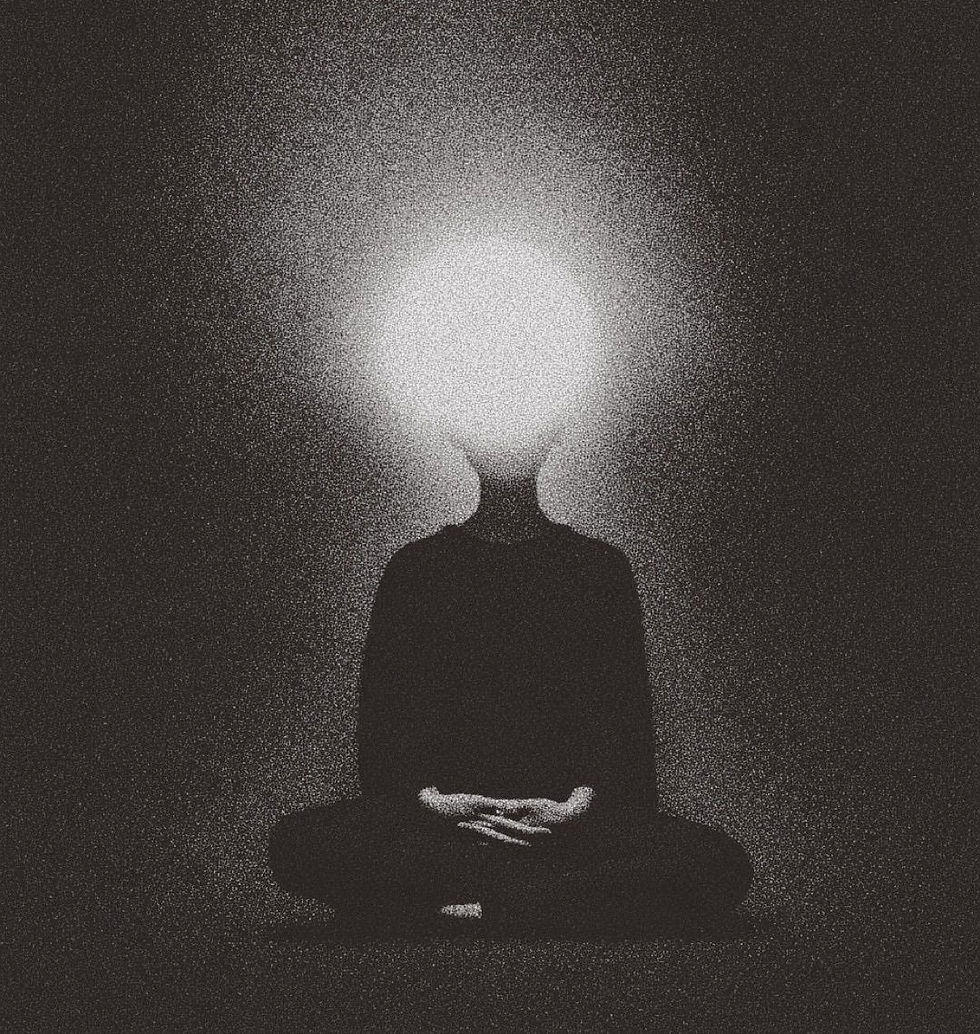
Understanding Shadow Work
What Is the Shadow?
The concept most closely associated with modern shadow work comes from Swiss psychiatrist Carl Jung.
Jung believed the conscious personality represents only part of the psyche. Human beings develop an identity around qualities they recognize and accept in themselves, while other characteristics may be rejected, suppressed, or remain unconscious.
These disowned aspects form part of what Jung called the shadow.
The shadow should not simply be understood as an “evil version” of ourselves. It can contain qualities we consider embarrassing, selfish, angry, jealous, vulnerable, socially unacceptable, or inconsistent with the person we believe ourselves to be.
But it can also contain positive qualities we have learned to suppress.
Someone taught never to draw attention to themselves might suppress confidence. Someone expected to remain agreeable might reject assertiveness. Someone who learned that emotional vulnerability was weakness might distance themselves from tenderness.
This is one reason I think describing shadow work as simply “embracing your dark side” misses something important.
The shadow is not necessarily evil.
It is hidden.
What Is Shadow Work?
“Shadow work” is the modern term commonly used for intentionally examining these rejected or less-conscious aspects of ourselves.
It might involve noticing recurring emotional reactions, questioning why certain characteristics in other people bother us so intensely, examining beliefs we inherited, recognizing contradictions in our behavior, or becoming curious about emotions we normally avoid.
The objective should not be to obey every impulse we discover.
Understanding something within yourself is not the same as allowing it to control you.
Instead, the goal is greater awareness and integration: recognizing that uncomfortable emotions and contradictory qualities can exist within us without defining our entire identity.
Before Jung, There Was the Examined Life
Shadow work is usually discussed through Jung, but the larger question behind it is ancient:
What happens when a person seriously examines themselves?
More than two thousand years before modern psychology, philosophers were already wrestling with versions of this question.
Socrates: Question What You Think You Know
Socrates is one of the reasons philosophy became so deeply connected with self-examination.
Rather than presenting himself as someone possessing every answer, the Socrates portrayed in Plato's dialogues repeatedly questioned assumptions—including his own knowledge.
That attitude is extremely relevant to how I approach shadow work.
We construct stories about ourselves:
I'm a good person.
I'm independent.
I don't care what people think.
I'm never jealous.
I'm always rational.
I'm just an angry person.
But shadow work asks another question:
Are you certain?
Sometimes the identities we defend most strongly deserve examination.
Socratic thinking encourages us to question what appears obvious. Instead of immediately defending ourselves when something uncomfortable emerges, we can become curious about it.
Why did that comment affect me?
Why do I keep repeating this pattern?
Why does this characteristic in another person irritate me so much?
What evidence do I have for this belief about myself?
What am I afraid it would mean if I admitted the opposite?
This does not mean distrusting everything about yourself. It means becoming willing to investigate your own assumptions.
Socrates' philosophical legacy reminds us that recognizing the limits of our knowledge can itself be a kind of wisdom.
And sometimes the person we understand least completely is ourselves.
Aristotle: Character Is Something We Practice
If Socrates gives shadow work its questions, Aristotle gives us another important piece: what we repeatedly do matters.
In Aristotle's ethics, becoming a good person is not simply a matter of knowing what goodness is. Character develops through habit, choices, emotional responses, practical reasoning, and repeated action.
That creates an important correction to some versions of shadow work.
Awareness alone does not automatically equal growth.
You can understand exactly why you behave a certain way and continue behaving that way.
You can recognize a pattern without changing it.
You can name an emotion without learning how to respond to it differently.
Self-awareness is the beginning—not necessarily the destination.
Aristotle also famously described virtue as involving an appropriate mean between excess and deficiency, determined according to the circumstances rather than by a simplistic mathematical midpoint.
Consider anger.
The goal is not necessarily to eliminate anger.
Too little anger can mean failing to respond appropriately when something genuinely matters. Too much can overwhelm judgment. The question becomes whether our emotional response fits the situation and whether reason remains capable of guiding our actions.
That distinction matters enormously to me.
Shadow work should not teach us:
“I shouldn't feel this.”
It can instead teach us to ask:
“Why am I feeling this, what is it telling me, and what am I going to do with it?”
The Shadow and Projection
One particularly interesting Jungian idea is projection.
Sometimes qualities we have difficulty recognizing in ourselves are easier to notice—or condemn—in someone else.
Imagine someone who believes they must always be humble but becomes intensely irritated whenever another person confidently talks about their accomplishments.
Maybe that other person truly is arrogant.
But shadow-oriented reflection asks an additional question:
Why does their confidence affect me this strongly?
Perhaps the reaction reveals something about the observer too.
Maybe confidence was discouraged in them. Maybe they secretly want recognition. Maybe they learned that expressing pride makes someone selfish.
None of those explanations should automatically be assumed. Other people can genuinely behave badly, and not every criticism is projection.
The value is in becoming curious enough to ask.
That distinction is important because shadow work should increase discernment—not convince us that every problem exists only inside our own minds.
Why I Connect Shadow Work With Lost Confessions
This is where shadow work becomes personal to my philosophy behind Lost Confessions.
I have always been interested in what exists beneath the identities people present to the world.
Psychology asks why we behave as we do.
Philosophy asks us to examine what we believe.
Spiritual traditions often ask us to look inward.
Art gives us somewhere to put what we discover.
Those worlds do not answer every question in the same way, and I don't think they need to.
Lost Confessions exists in the space between them.
To me, a “lost confession” does not have to be some enormous secret.
Sometimes it is an emotion you never admitted.
A belief you inherited but never questioned.
A version of yourself you abandoned.
A question you were afraid would make you strange.
A piece of art you created because ordinary conversation could not contain what you were trying to express.
That is part of why I am drawn to shadow work.
The Vault is built around looking beneath the surface.
Why Darkness Is Part of My Shadow Work
My use of dark and Gothic imagery is intentional.
Darkness is often treated symbolically as something frightening, immoral, or dangerous. But darkness can also represent the unknown.
That makes it an incredibly powerful metaphor for introspection.
You cannot examine only the parts of yourself you already understand and call it complete self-knowledge.
This is also why my creative work often includes Gothic imagery, psychology, poetry, symbolism, anatomy, old literature, spirituality, and darker aesthetics.
I don't use darkness because I believe suffering should be glorified.
I use darkness because it gives visual language to the things people often struggle to discuss.
The Gothic asks us to enter the abandoned room.
Psychology asks us why we are afraid of what might be inside.
Philosophy asks whether our assumptions about it are true.
Shadow work asks us to turn on the light and look.
Creativity as a Mirror
One of my strongest connections to shadow work has been through creating.
I have old journals filled with strange combinations of drawings, scraps, words, colors, symbols, textures, unfinished thoughts, and things that probably only made complete sense to the version of me who created them.
Looking back at old creative work can feel almost archaeological.
You encounter evidence of yourself.
Not necessarily the person you are today, but a previous version of your mind—what fascinated you, frightened you, comforted you, confused you, or demanded expression.
That is one reason I think art can become such an interesting tool for reflection.
Instead of immediately asking whether something we created is “good,” we can ask:
Why did I make this?
Why did I choose this image?
Why did this symbol keep appearing?
What emotion was I trying to express?
What does this mean to me now that it didn't mean then?
The point isn't to psychoanalyze every drawing or assign secret meanings to everything we create.
Sometimes a rose is simply a rose.
But sometimes art becomes a mirror we didn't realize we were building.
Shadow Work Is Not Self-Punishment
This distinction matters.
Introspection can become unhealthy if it turns into endless self-criticism.
Shadow work should not mean searching through yourself for evidence that you're secretly terrible.
It should not become:
What's wrong with me?
It should move closer to:
What is happening within me, and what can I learn from it?
There is a major difference between accountability and self-hatred.
Recognizing jealousy does not make you irredeemably jealous.
Recognizing anger does not make you an angry person forever.
Recognizing selfishness does not erase every generous thing you have ever done.
Human beings contain contradictions.
Integration means becoming capable of acknowledging those contradictions without allowing one uncomfortable discovery to become your entire identity.
Practicing Shadow Work
Shadow work does not require elaborate rituals. It can begin with reflection.
Try noticing the moments when your emotional response feels unusually strong. Instead of immediately judging yourself, become curious about what happened.
Questions I find more useful than simply asking “What's wrong with me?” include:
What am I feeling beneath my first reaction?
Why might this particular situation affect me so strongly?
What qualities in other people do I judge most harshly?
What parts of myself do I work hardest to prove are not there?
What emotions was I taught were unacceptable?
What beliefs about myself did I inherit from other people?
What version of myself am I still protecting?
Is this reaction connected to the present situation, or does it remind me of something older?
What would accepting this feeling look like without allowing it to control my behavior?
What would I choose differently now?
Writing, art, music, mindfulness, and thoughtful conversation can all provide ways to explore these questions.
And when reflection brings up experiences or emotions that feel overwhelming, shadow work does not have to be done alone. A qualified mental-health professional can provide a safer and more structured space for exploring difficult material.
From Shadow to Integration
The point of shadow work is not to live permanently inside the shadow.
It is to bring greater awareness to what was previously hidden.
Jung's psychology ultimately placed enormous importance on becoming a more integrated person rather than simply identifying with the socially acceptable parts of ourselves.
Socrates reminds us to question what we assume we know.
Aristotle reminds us that insight must eventually meet practice—that character is shaped through what we repeatedly choose and do.
And creativity gives us another language through which to encounter ourselves.
Different centuries. Different systems of thought.
But they converge around a question that sits at the center of Lost Confessions:
What might we discover if we become brave enough to examine ourselves without immediately turning away?
Maybe growth isn't becoming someone who has no shadow.
Maybe it is becoming someone who knows they have one—and no longer needs to pretend otherwise.
That is what shadow work means to me.
Not worshipping darkness.
Not becoming darkness.
Understanding what has been hidden there.
And perhaps returning from it knowing yourself a little better than before.
Not all who wander are lost… some are searching for meaning in the dark.
— A. V. Cerna
Founder of Lost Confessions

Comments